FIG PUBLICATION NO. 54
Compulsory Purchase and Compensation
Recommendations for Good Practice
FIG Commission 9 – Valuation and the Management of
Real Estate
Kauko Viitanen
Heidi Falkenbach
Katri Nuuja

Contents
Foreword
Executive summary
1. Introduction
Background
Process of drafting the recommendations
Structure of recommendations
2. FIG Policy Statement on Compulsory Purchase
and Compensation
Recommendations for Good Practice
3. Discussion on the Recommendations for Good
Practice
General principles
Compulsory purchase basis
Proceeding of demarcation and registration
Proceeding for determining compensations
Restitution
References and Bibliography
Orders for printed copies
FIG Commission 9 (Valuation and the Management of Real Estate) took
compulsory purchase and compensations in land acquisition as the main topic for
the period 2007–2010. Compulsory purchase (expropriation, eminent domain) is in
most countries an important tool for acquiring land for the purposes of public
use, even if land acquisition can often be arranged through other means such as
voluntary agreements. Compulsory purchase should ensure that land can be
purchased for adequate development opportunities for the wider public benefit,
while individual land rights and social sustainability are as fully protected as
is possible throughout the process.
FIG Commission 9 was concerned about how well contemporary regulations and
practices function. Because this topic is not covered by valuation standards,
there is a need for guidance from professional bodies such as FIG that can
contribute in gathering and disseminating information and also work as a
discussion forum to support jurisdictions in developing the capacity needed.
Papers on this topic have been presented and discussed at all FIG conferences
held over the four-year term of office and also at a special seminar was
conducted. In addition, three surveys about most the important elements were
undertaken to include FIG member organisations and real estate experts in order
to gather a wide breadth of information.
This FIG policy statement gives recommendations for guidelines in compulsory
purchase and compensation. It lays down the most important factors and makes
recommendations for an equitable, efficient and effective process of acquisition
and awarding of compensation. The publication should be seen as a tool to
support politicians, executive managers, and policy-makers in their efforts to
deal with land acquisition and compulsory purchase in a fair and equitable way,
based on legal standards, full compensation, and acknowledgement of human
rights.
The expert group which prepared the document was led by Professor Kauko
Viitanen, Chair of FIG Commission 9, and included Dr. Heidi Falkenbach, M.Sc.,
LLM Katri Nuuja and Ms. Liping Huang. In addition Commission 9 delegates, and
especially Chair elect Professor Frances Plimmer, and partici-pants and many
experts of real estate property contributed to the document. Also many
organisations outside FIG were actively taking part in preparation: United
Nations Food and Agriculture Organization (FAO), the World Bank, UN-Habitat,
UN-UNEP, Aalto University Real Estate Research Group (REG), and the Government
of Finland particularly the Ministry of Agriculture and Forest (MAF) and
National Land Survey (NLS). MAF, FAO, NLS, and REG have also supported the
project financially.
On the behalf of FIG, we would like to thank the members of the expert group
and all the specialists and organisations who contributed to this publication
for their constructive and helpful work and support.
Prof. Stig Enemark
FIG President |
Prof. Kauko Viitanen
Chair, FIG Commission 9 |
The ownership of real estate property is protected by the constitution in
most countries, as well as by declarations of human rights. Because of the
nature of the real property the right of ownership can, however, be limited.
Thus, society, in various forms of government, has reserved a right to
interfere in personal ownership of real estate, when it is necessary for the
public good. For ex-ample, if the society needs a land area of a real
property for a street, the owner has to convey land for that purpose, if not
voluntary then by compulsion. For this interference there are normally
strict preconditions in order to protect the functions of the free market
and equitable treatment of those whose rights are affected.
This FIG policy statement presents FIG’s recommendations for good practice in
compulsory purchase and compensation in land acquisition and recompense. It aims
to support and inform discussion between valuers, surveyors, real estate
experts, financiers, urban planners, re-searchers, teachers and decision-makers
and develop common principles and the sharing of good practice for shaping the
future of compulsory purchase and compensation in land acquisition and
compensation. It gives support for professional organisations, including in the
area of capacity building and helps to achieve social justice in a resilient
balance between economic development, environmental protection, and the
livelihood of individuals and local communities. FIG believes that these
recommendations are one of tools necessary to help to achieve the UN Millennium
Development Goals.

Singapore. © Stig Enemark
1. Introduction
Compulsory purchase (expropriation, eminent domain) is a vital tool in most
of countries for land acquisition for public purposes, although in many
countries land acquisition can most often be arranged through other means,
especially by voluntary agreements. In some cases the governments can locate the
public activities needed in those places where willingness to sell land exists;
but in other cases it is necessary to take land in specific places to achieve
sustainable and resilient urban or rural structures, i.e. in case of streets or
water protection structures. In recent years, discussion of the
use of compulsory purchase has been rather limited and new legislation,
practices and methods of valuation for compensation may have developed and been
adopted. FIG’s Commission 9 concerns were about how well these new legislations
and practices function and also whether the old methods and procedures might
have become ineffective or unfair and un-popular.
The most critical point concerning compulsory purchase may be the question of
compensation. Will the compensation regulations, valuation methods and manners
really lead to full and just compensation for those adversely affected? The
rules for compensation depend on the legislation of each country. The main
principle in most countries seems to be that the landowner’s financial situation
shall remain the same despite the compulsory purchase. No one should become
poorer because of compulsory purchase but neither should they gain at the
expense of the taxpayer. Only economic values can be compensated but
non-economic losses cannot. There are no strict rules requiring the owner to be
able to purchase a similar property for the level of compensation awarded,
although the statutory basis of compensation (which tends to be based on the
principle of market value) aims to achieve this, and normally this can even be
expected. But if compensation is not adequate to achieve ‘financial
equivalence’, there is a major risk that in some cases such an unjust situation
will result in a landowner losing the means of making a living It seems that
there are also many countries where the rules and / or practices in compulsory
purchase are still weak, the know-how limited, and the award of compensation
inadequate.
The Helsinki seminar provided, a solid starting point for the identification
of good practice, and recommendations based on fundamental and profound
observations were developed based on the presentations and discussions.
Concerning the procedure of compulsory purchase, it can be observed that, from
the perspective of the acquiring authorities, there is a need for a speedy
timeframe, and low cost process both for taking title and possession of the land
and for the fixing and payment of compensation, avoidance of external costs of
procedure, and there should be sufficient resources available in advance to pay
for the compulsory purchase procedure and the resulting compensation. On the
other side, from the perspective of affected occupants, users and owners, there
is the need for involvement, transparency and information, avoidance of
compulsory purchase (generally – it has to be absolutely necessary), a proper
planning and negotiation process and a payment of what is seen to be ‘fair’
compensation. Those issues are also relevant for foreign investors for whose
developments the land is being acquired. Further, the interests of women/men,
landlords/tenants, formal/informal and indigenous and customary have to be
recognised and respected. Resettlement can be an option in certain situations,
and if possible should be combined with rights to return. (Viitanen & Kakulu
2008a, 2008b).
The major goal of this publication is to support and inform discussion
between valuers, surveyors, real estate experts, financiers, urban planners,
researchers, teachers and decision makers and develop common principles for
shaping the future of compulsory purchase and compensation in land acquisition
and compensation. It strives to offer the potential for new and better practices
and in that way, contribute to a better and more sustainable living environment
for everyone in the world.
The recommendations in this publication can be used, for example:
- To identify different legal structures and practices in compulsory
purchase and compensation in different countries and analyse where they vary
from international best practice
- To study if the compensation statutes, valuation methods and their
implementation can actually lead to full and just compensation (as defined)
and to identify possible shortcomings
- To find achievable and effective solutions to solve identified problems,
especially in developing countries, including the introduction of good
practices and those principles that should be taken into consideration and /
or those that should be avoided
- To be used in developing the national legislation and practices.
Process of drafting the recommendations
Compulsory purchase and compensations in land acquisition and takings was the
main subject of FIG Commission 9 (Valuation and Management of the Real Estate),
for the period 2007–2010. The work was organised in the WG 9.1 led by the chair
of the Commission, Professor Kauko Viitanen. The subject was progressed in all
FIG Working Weeks and conferences by presenting papers and at round table
discussions, and in Commission 9 meetings during the four-year work plan. In
addition two special seminars were arranged in Helsinki 2007 and in Beijing
2008, and the subject was further addressed at the Verona seminar organised by
FIG Commission 7 in 2008.
The WG 9.1’s activities made major progress in the seminar on Compulsory
Purchase and Compensation in Land Acquisition and Takings held in Helsinki. The
seminar was organised in conjunction to the Baltic Valuation Conference and in
co-operation with FIG Commissions 7 and 8, FAO’s Land Tenure Service, the World
Bank, the Finnish Association for Real Estate Valuation, the Finnish Association
of Surveyors, the Ministry of Agriculture and Forest in Finland, the Na-tional
Land Survey in Finland, the Nordic Journal of Surveying and Real Estate Research
and the Helsinki University of Technology / Department of Surveying.
The Helsinki seminar was attended by about 120 very active participants from
35 countries with more than 40 very interesting presentations. Of all papers, 21
papers went through the peer-review process and in addition three were reviewed
in the connection of the FAO “Land Reform, Land Settlement and Cooperatives”
journal 2008/1. The presentation slides have been published on the seminar
website. The full papers have been published mainly in the above mentioned FAO
journal themed on “Compulsory Purchase and Compensation”, in the special
edition of the “Nordic Journal of Surveying and Real Estate Research” and
in the seminar book (Viitanen & Kakulu 2008b) published in the research series
of the Department of Surveying at the Helsinki University of Technology.
Based on the discussions in seminars and conferences the first draft of the
recommendations was structured. Thereafter, a questionnaire aimed at testing
whether the recommendations received international acceptance was prepared, and
mailed to participants of the Helsinki seminar, FIG commissions 7, 8, and 9
delegates and some other real estate experts in the summer of 2009. The results
of the survey were then presented and discussed at the FIG regional conference
in Hanoi in October 2009. Based on these discussions, a second draft version was
presented at the FIG Congress in Sydney in April 2010 and, after modification,
sent for comments in June 2010 to the same group as before. The final draft
version was once again sent for comments in September 2010 to those actively
taken part in WG 9.1. The aim in the two feedback rounds was to be sure that all
important areas have been covered in the guidelines and that the recommendations
correspond to a widely-accepted view about principles and good practices. The
FIG policy statement and guidelines were then finalised in October 2010.
Structure of recommendations
The recommendations are divided in five sections (Figure 1). General
principles give overall guidelines to be followed when structuring regulations
and activities in land acquisition by compulsion, and should be applied in all
phases on the compulsory purchase process. The other four sections discuss in
more detail, recommendations related to the separate phases of compulsory
purchase process, i.e. compulsory purchase basis, proceeding for the demarcation
and registration, the proceedings for the determining compensation, and
restitution.
A more detailed discussion on the recommendations is provided in Section 3 of
this publication. The aim of the discussion section is to help readers to
understand more easily the purpose of each recommendation and to provide
examples. However, the discussion is not exhaustive and should only be taken as
illustrative.
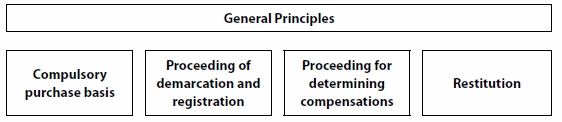
Figure 1: The Structure of recommendations.
2. FIG Policy Statement on Compulsory
Purchase and Compensation
Recommendations for Good Practice
1 Compulsory purchase shall not be the preferred tool for the acquisition of
land.
1.1 Compulsory purchase is not the preferred option if other routes to
land acquisition can be pursued, such as voluntary means, land exchange1
or compulsory purchase of partial rights.
1) Also
referred to as land-for-land exchange.
1.2 There are circumstances where due to scale of project or
complexity of ownership structure, compulsory purchase can, however, be the
only feasible option.
2 The compulsory purchase shall be implemented with respect for the rights of
affected parties.
2.1 Affected parties and the rights to be taken from them shall be
identified in the proceedings.
2.2 Affected land owners, right holders, legitimate occupiers and legitimate
users of the land to be acquired as well as persons and different
organisations and groups that are affected by the compulsory purchase shall
have an opportunity for genuine participation.
2.3 Affected parties, including the poor, women and young people, shall be
able to participate effectively in the process and authorities shall provide
them the necessary opportunities, advice, assistance, capacity building and
knowledge enhancement.
2.4 Affected parties shall have the right to be present, comment, request
and be provided with information on issues affecting them, and have their
views and comments taken into account before decisions are made. A written
statement should explain how such views etc. have been taken into account in
the decision(s) made.
3 The compulsory purchase shall be legitimate.
3.1 All aspects of the complete process, in which land is taken, the
awarding of powers and the process(es) for acquisition shall be clearly and
specifically enshrined in legislation.
3.2 The right to compensation for all losses incurred as a result of the
compulsory purchase or depreciation in value of land rights, the method of
assessing, agreeing, determining (in the case of non-agreement) and paying
compensation to relevant parties shall be clearly and comprehensively laid
down in legislation.
3.3 The process for land acquisition and the payment of compensation shall
be implemented in accordance with the legislation and internationally
recognised best practice.
4 The compulsory purchase process shall be an inherent part of the process of
land acquisition and be exercised in an objective, impartial, independent and
ethical manner.
4.1 The body conducting the compulsory purchase procedure shall be a
body, which is independent and impartial from the other actors
4.2 Ex-officio2 principle or other
processes, which guarantee that incapable persons (including those absent at
the time the acquisition takes place) get a right and fair treatment, shall
be applied.
2) Ex officio
refers here to the principle where the party responsible of the procedure
(e.g. compulsory purchase procedures) is expected to give the affected
parties legal protection even if they have not made a request in that
effect. In the case of compulsory purchase, an example of the application of
this principle requires the body conducting the expropriation procedure to
determine the just compensation as part of the due process of law, without
the affected party having to request it. Thus, compulsory purchase is not
possible without a just compensation to the property right owner who suffers
of the compulsory purchase.
4.3 The persons responsible for conducting the compulsory purchase
shall have the necessary professional and technical competence and
experience as well as adequate resources to undertake the task; the
requirements for competence and experience shall be defined in law.
4.4 There shall be a code of ethics (code of conduct) to serve as a guide to
the highest professional conduct in the process of compulsory purchase and
the assessment of compensation.
5 The compulsory purchase process shall be transparent.
5.1 All documents relevant to the procedure shall be available to
affected parties.
5.2 Affected parties shall have the right and a genuine opportunity to
access the information.
5.3 Information shall be communicated in a manner which affected parties
understand.
6 The costs of the compulsory purchase process are to be carried by the
expropriator.
7 The right to appeal to an independent court shall be ensured.
7.1 Affected parties shall have the right to appeal against separate
decisions of compulsory purchase, e.g. basis of expropriation, cadastral
procedure and compensation.
7.2 Affected parties shall be informed about the appeals procedure(s)
available during the different stages of the process.
8 Affected parties have the right to represent themselves and / or use an
attorney, expert, or agent to do so.
8.1 The reasonable expenses are to be paid by the expropriator.
9 Compulsory purchase can only be used for public interest.
9.1 Compulsory purchase shall only be used if the benefits to the society
exceed the inconvenience and harm caused affected parties who are
disadvantaged by the process of land taking and the subsequent development
(if any).
10 The basis of compulsory purchase shall be legitimate.
10.1 Principal purposes for which land can be taken shall be clearly
identified in legislation.
10.2 The law shall determine who is entitled to use compulsory purchase.
10.3 When the compulsory purchase right is based on a plan (e.g. land use
plan), it shall be defined in law how the right to use compulsory purchase
is initiated and how the process of land designation can be challenged.
11 The scope of compulsory purchase shall be determined so that it causes the
least harm to affected parties while ensuring that the project for which land is
taken can be implemented effectively.
12 When the right to use compulsory purchase takes effect, the time limit for
starting the proceeding shall be set.
12.1 The compulsory purchase should be implemented without delay.
12.2 The time limit for starting the proceeding shall be established in
legislation.
12.3 If this time limit is exceeded, the landowner or the occupants, whose
land is identified within the proposed expropriation, have the right to
claim for the compulsory purchase proceeding, if it is not claimed by the
expropriator.
13 Where the authority intends to acquire only part of an individual’s land,
a formal opportunity shall exist that allows or includes the provision for the
dispossessed party to inquire whether there is to be a partial or total
acquisition of their property.
14 Cadastral procedure related to compulsory purchase and takings shall be
defined by law.
15 Demarcation shall be done according to the compulsory purchase permit.
15.1 The need for a terrain survey shall be evaluated.
16 Relocation of servitudes, easements etc. rights shall be taken care of
within or coordinated in the compulsory purchase process.
17 Boundary and other ownership disputes over legal rights shall be resolved
in connection with the process.
17.1 The expropriator shall be responsible for the costs of resolving
disputes which stem from compulsory purchase.
17.2 The expropriator shall not be responsible for the costs of resolving
disputes which do not stem from compulsory purchase.
18 Registration of the changes in the boundaries of properties and rights
shall be entered into the cadastre and land register, or other relevant register
and records as recognised and accepted by the authorities and affected
communities, on an ex-officio basis, or through other processes. Such processes
should guarantee that also incapable persons are appropriately protected.
19 The compensation shall ensure that the affected party’s financial position
is not weakened. The term just compensation is, therefore, defined as the level
of compensation paid which does not weaken the affected party’s financial
position.
19.1 Legislation shall define which losses are compensated and which
should be tolerated without compensation.
19.2. Legislation should also determine any preconditions for receipt of
compensation e.g. nature of tenure, any occupational requirements.
20 The basis and principle terms of compensation shall be defined by law.
21 The law shall also determine
– who is to be compensated
– the valuation date
– principles of the payment of the compensation
– who will fix the amount of compensation payable
– process by which compensation is fixed, agreed, appealed, paid and the
rate of and extent to which interest may be paid on any outstanding amount.
22 The law shall ensure just compensation (as shown in Recommendation 19) and
ensure that all items of loss which flow naturally and reasonably from the
process and outcome of acquisition and development are compensatable.
Legislation may provide different bases on which different losses may be
determined, subject always to the overriding outcome that the affected party’s
financial position shall not be weakened. Thus legislation may define the base
or the bases which of the following to be assessed in compensation:
– compensation for the object taken
– compensation for compulsorily purchased rights
– compensation for severance and injurious affection to land held with land
taken and to those who are not expropriated but whose land is nevertheless
reduced in value as a result of the acquisition and subsequent development
and its operation
– damages or disturbance (e.g. replacement costs and harm and damage related
to the removal of goods, fixtures, fittings and stock in trade, all losses
related to the dispossession as well as mortgage arrangement costs and
transaction costs)
– compensation for all surveyors and legal costs (also including
compensations for those whose land is not expropriated but merely
depreciated in value).
23 If a residence or a business is compulsorily purchased, the compensation
shall be sufficient for a replacement dwelling or a replacement business
establishment which corresponds to compulsorily purchased property in physical
conditions as well as economic and location attributes.
24 Compensations shall be determined so that the affected party’s financial
status does not suffer a loss because of taxation.
25 If there are losses which are considered unsure or unlikely or cannot be
assessed at the time of the proceedings, there shall be a possibility for
compensation if these losses actualize in the later stage.
26 It shall be clearly stated in law if the impact from the project or the
compulsory purchase is taken into account when assessing the value of the
object.
26.1 It shall be made clear whether or not the gains in the value of land
arising from the project are deducted from the compensation payable
(betterment deduction).
27 In particular in the case where compulsory purchase is for public purpose
undertaken by other than a public body, profit-sharing principles shall be
determined by law.
28 Compensation for the object shall in the first instance be determined
based on market value.
28.1 If market value cannot be determined, the compensation for object
shall be based on fair value.
29 The valuation process and the valuations shall be done according to the
International Valuation Standards (IVS), or other recognised valuation
standards.
30 Inaccuracy of the valuation shall be taken into account when determining
compensation so that the expropriator bears the risk for inaccuracy.
31 Compensation shall be directed to those whose economic status is adversely
affected by the compulsory purchase.
31.1 The parties who are entitled to compensation shall be specifically
identified within legislation and the process of implementing powers of
compulsory purchase.
31.2 Customary rights, family rights, women’s rights, societal forms of
property rights (tribal/group/individual) and informal possession rights
shall be included and recognised within the process of implementing powers
of compulsory purchase, as well as the legislation established for the
payment of compensation.
31.3 The rights of the legitimate mortgage holders shall be secured.
31.4 Compensation shall be deposited according to the legal structures of
the specific country (e.g. escrow account) when the owner is unknown or
ownership is in dispute, the lien is threatened, etc.
32 Compensations shall be paid prior to the taking of possession by the
authority.
32.1 In the case of pre-possession, compensation of the object, or an
advance payment based on the expropriator’s estimated amount of
compensation, shall also be paid prior to the pre-possession.
32.2 If the residence or source of livelihood is compulsorily purchased,
there shall be a reasonable time between the date compensation is paid and
the date of possession (advance payment as in 32.1 above)
32.3 The part of compensation, which is under dispute as at the date of
possession, shall be deposited with the courts and managed in accordance
with national legislation.
32.4 It shall be defined in the law whether the possession is possible if
the compensation has been appealed, especially in the case of a residence or
business.
33 Compensation shall be paid in money.
33.1 If the party who conveys the property agrees, the compensation can
be paid in alternative ways, such as land and corporate shares, or through
proceedings such as land swap.
34 Compensation shall be paid in a single once and for all payment.
34.1 For components other than compensation for object, annual payments
of compensation can be used, if the party who conveys agrees to such regular
payments and legislation enables it.
35 Interest shall be paid on outstanding compensation from the valuation date
or possession date, depending on which is earlier, till the full payment is
made.
36 The payment of compensations shall be made in due time
36.1 The payment of compensation shall be controlled by the body
responsible for the procedure.
36.2 If the compensation is not paid on time, the affected party shall have
the right to force payment through the court process or, assuming that the
authority has not taken possession and commenced development, to require
that the compulsory purchase shall be annulled.
36.3 In such circumstances as are outlined in 36.2, the authority shall be
liable to pay the affected party’s costs as well as higher than usual levels
of interest on the outstanding amount of compensation.
37 If the purpose of compulsory purchase is cancelled, abandoned or rights
are lost through the expiration of a time limit, the obligation for restitution
shall be determined in the law.
37.1 The law shall determine the time period within which the obligation
is in force, according to the national provisions.
37.2 It shall be defined in the law whether the original landowner shall
have the right of first refusal if the compulsorily purchased land is to be
sold in the open market.
37.3 If the property has been legally or physically altered in any way (e.g.
by the award of planning permission or by the construction of some object,
not including the construction of new boundaries, then it shall be specified
in law the time period within which the original owner shall have the right
of first refusal on such land.
37.4 In all cases, an original owner shall pay open market value for the
land, fixed as at the date the property is offered back by the authority.
38 Legislation may provide for other government departments or national
authorities to seek to appropriate the land from the original purchasing
authority for another use.
38.1 Legislation shall specify if and under what conditions land
purchased by one authority for a stated purpose can be appropriated by
another authority for a different purpose.
38.2 Where subsequent authorities have appropriated the land from the
original authority but the land remains unused for a period of time
specified in legislation, then the rights of the original owner, under
Recommendation 37, to purchase the land back from either the original or
subsequent owner authorities shall be recognised.

Vancouver, Canada © FIG
3. Discussion on the Recommendations for
Good Practice
1 Compulsory purchase shall not be the preferred tool for the acquisition
of land.
1.1 Compulsory purchase is not the preferred option if other routes to
land acquisition can be pursued, such as voluntary means, land exchange3
or compulsory purchase of partial rights.
3) Also
referred to as land-for-land exchange.
1.2 There are circumstances where due to scale of project or complexity of
ownership structure, compulsory purchase can, however, be the only feasible
option.
The recommendation outlines the principle for selecting the method for land
acquisition. As compulsory purchase constitutes an infringement to the rights of
the affected party, other, less draconian methods should be used whenever
possible.
These methods include the attempt to acquire the land through voluntary
means, i.e. by agreement for sale with the owner of the property. This should be
seen as the preferred means of acquisition. Other alternative methods include
land exchange, where the land owner is compensated with land of equal or similar
value (not less) in exchange for the land needed for the project. It is also
possible, that the compulsory purchase only concerns partial rights, such as
usufruct, and the land owner retains the ownership to the property. Another
possibility is for the acquiring authority to create and acquire an easement or
servitude for the purpose of the project.
An example of this approach is in the building of a power line, where
usufruct to the area needed for the project is issued to the company realizing
the project and the affected party retains ownership of the property. The
landowner may continue to use the property e.g. for agriculture or forestry,
subject to the right of the company for access onto the land to inspect,
maintain, repair etc. their structures. However, there are projects in which
this approach is not possible, because the project in question requires an
exclusive right of possession to the property.
The scope in which the alternative acquisition methods should be considered
varies depending on the situation and the project. Recommendation 1.2 states,
that in some cases compulsory purchase may be the only feasible option for land
acquisition and development. This may occur in cases, where the scope of the
project is large and/or the ownership of the area concerned is complex (e.g.
there is a high number of absentee owners or ownership is highly fragmented).
Thus finding an alternative method to acquire all needed land may in practice be
impossible.
When considering the method of acquisition, a balance between the fairness,
cost efficiency and effectiveness of the process should be made. Attempting to
obtain agreements with all landowners may be unreasonably time-consuming (and
therefore costly) and risk the success of the project.
Nevertheless, in all circumstances, alternate means of land acquisition (i.e.
the avoidance of compulsion) are the preferred options and should be considered
in every case, as described in Recommendation 1.1. Recommendation 1.2 should be
considered as an exception to the main rule.
2 The compulsory purchase shall be implemented with respect for the rights
of affected parties.
2.1 Affected parties and the rights to be taken from them shall be
identified in the proceedings.
2.2 Affected land owners, right holders, legitimate occupiers and legitimate
users of the land to be acquired as well as persons and different
organisations and groups that are affected by the compulsory purchase shall
have an opportunity for genuine participation.
2.3 Affected parties, including the poor, women and young people, shall be
able to participate effectively in the process and authorities shall provide
them the necessary opportunities, advice, assistance, capacity building and
knowledge enhancement.
2.4 Affected parties shall have the right to be present, comment, request
and be provided with information on issues affecting them, and have their
views and comments taken into account before decisions are made. A written
statement should explain how such views etc. have been taken into account in
the decision(s) made.
The recommendation requires the recognition of the rights, including human
rights, of the affected party in the compulsory purchase process. These include
the right and the opportunity to participate effectively in the process.
Recommendation 2.1 requires all affected parties and the rights to be taken
from them to be identified in the proceedings (see Figure 2). Identification is
necessary to ensure, that all affected parties are given the opportunity to
participate and receive a fair treatment in the process and that the property
rights taken from them as well as claims for compensation are fully taken into
account in the implementation of the compulsory purchase decision or permit.
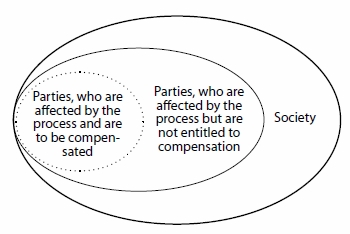
Figure 2: Parties in compulsory purchase.
It should be noticed that the borderline between the affected parties entitled
to compensation and affected parties not entitled to compensation may be
different for the different components of the compensation and that not all
effects of the project are compensated as compensation thresholds might be
adapted.
The requirement of identification applies to parties, whose identity is known
or can be reasonably obtained. Attempts should be made to trace and contact
absentee owners. It should be noted that the compensation shall be guaranteed
and assessed for all affected parties who have right to it, even though they
might not have been contacted (see Recommendation 4.2).
Recommendations 2.2 and 2.3 list examples of groups of persons, who should be
considered as affected parties in the process and given the right to participate
and have their views taken into account in the process.
A requirement for effective participation is that sufficient information
about the process is given to all affected parties equally (see Recommendation
5). Participation also means that all affected parties have the right to be
present, represented at, and to be heard in the proceedings, to make statements
as well as requests on issues affecting them before decisions are made. All such
comments, statements, views and requests should be taken into account in the
making of decisions.
3 The compulsory purchase shall be legitimate.
3.1 All aspects of the complete process, in which land is taken, the
awarding of powers and the process(es) for acquisition shall be clearly and
specifically enshrined in legislation.
3.2 The right to compensation for all losses incurred as a result of the
compulsory purchase or depreciation in value of land rights, the method of
assessing, agreeing, determining (in the case of non-agreement) and paying
compensation to relevant parties shall be clearly and comprehensively laid
down in legislation.
3.3 The process for land acquisition and the payment of compensation shall
be implemented in accordance with the legislation and internationally
recognised best practice.
Recommendation 3 outlines the application of the fundamental principle of
legality in both the right to use compulsion to acquire land, in the compulsory
purchase process, and in the determination and payment of compensation.
Considering the nature and the degree of infringement which compulsory
purchase powers causes to the affected party’s rights, the right to take land
using compulsion, the process adopted, the base(s) of expropriation, rules
concerning fixing and payment of compensation as well as all other relevant
issues concerning compulsory purchase and compensation should be clearly and
comprehensively authorized in legislation. It is also imperative that the legal
process is implemented by all practioners. This is also necessary to ensure
equal treatment of affected parties in all cases of compulsory purchase as well
as the comprehension, equity and predictability of the application of the
procedure.
The predictability of the process as well as the ability to ensure the
implementation of projects that meet the agreed requirements is also important
from the point of view of the expropriator as well as society in general.
4 The compulsory purchase process shall be an inherent part of the process
of land acquisition and be exercised in an objective, impartial, independent and
ethical manner.
4.1 The body conducting the compulsory purchase procedure shall be a
body, which is independent and impartial from the other actors
4.2 Ex-officio4 principle or other
processes, which guarantee that incapable persons (including those absent at
the time the acquisition takes place) get a right and fair treatment, shall
be applied.
4)
Ex officio refers here to the principle where the party
responsible of the procedure (e.g. compulsory purchase procedures) is
expected to give the affected parties legal protection even if they have not
made a request in that effect. In the case of compulsory purchase, an
example of the application of this principle requires the body conducting
the expropriation procedure to determine the just compensation as part of
the due process of law, without the affected party having to request it.
Thus, compulsory purchase is not possible without a just compensation to the
property right owner who suffers of the compulsory purchase.
4.3 The persons responsible for conducting the compulsory purchase shall
have the necessary professional and technical competence and experience as
well as adequate resources to undertake the task; the requirements for
competence and experience shall be defined in law.
4.4 There shall be a code of ethics (code of conduct) to serve as a guide to
the highest professional conduct in the process of compulsory purchase and
the assessment of compensation.
This recommendation lays out general requirements concerning the impartiality
and independency of the compulsory purchase process as well as qualification
requirements and ethical guidelines to the body conducting the process.
Firstly, the body conducting the compulsory purchase procedure should be an
independent and impartial body, i.e. it should have no affiliation to either the
expropriator or any of the affected parties that may cause doubt of the
impartiality of the body. The body conducting the compulsory purchase process
should work exclusively within the legislation and internationally-recognized
best practice. Such an organisation should be subject to public scrutiny and to
wider democratic and professional accountability for its performance.
Recommendation 4.1 applies to both the decision making body, as well as the body
implementing the compulsory purchase.
Recommendation 4.2 concerns the responsibility of the body conducting the
compulsory purchase in ensuring that all affected parties’ rights are thoroughly
respected and duly taken into account in the process, in accordance with the
legislation and internationally recognized best practice. For example, those who
are incapable or who are absent at the time acquisition takes place are treated
in the same way as if they were fully represented, and compensation determined
accordingly (see footnote on the ex officio principle)
Recommendations 4.3 and 4.4 lay down requirements as to the qualification and
professional ethical guidelines of the body and/or the individuals conducting
the compulsory purchase process. Firstly, the persons responsible for carrying
out the compulsory purchase process and making the necessary decisions in it
should have the competence needed (e.g. requirement of a certain level and
quality of education as well as technical and professional expertise in specific
fields such as land management, real estate valuation, real estate law) as well
as previous experience and competence in conducting such processes. The
application of this recommendation varies due to differences in national
education systems, but it serves as a guideline in evaluating the national
professional requirements.
Secondly, a code of ethics should act as a guide to the highest professional
standards of conducting the compulsory purchase procedure and the assessment of
compensation. Many national and international organisations in the field have
issued such codes, which apply to the member associations and members of such
bodies (e.g. Council of European Geodetic Surveyors [CLGE], Code of Conduct for
European Surveyors, signed 11–12 September 2009). It is vitally important that
the professional and technical expertise involved in this work is enhanced by
the highest code of ethical behavior, given the economic, social and political
importance of land rights issues, as well as the often large amounts of
compensation involved. Adherence to the highest ethical standards should
encourage public trust and confidence in the processes involved, and should thus
facilitate a less adversarial, protracted and costly process.
5 The compulsory purchase process shall be transparent.
5.1 All documents relevant to the procedure shall be available to
affected parties.
5.2 Affected parties shall have the right and a genuine opportunity to
access the information.
5.3 Information shall be communicated in a manner which affected parties
understand.
The recommendation outlines the requirement that the compulsory purchase
process be transparent. This recommendation has a strong link to Recommendation
2, which emphasizes the genuine participation of the affected parties in the
process. Transparency and sufficient provision of information about the process
is essential to ensure effective participation.
Recommendations 5.1 and 5.2 lay out, that all documents relevant to the
process should be made available to the affected parties and that they must have
the right and the opportunity to access the information. Absentee owners must be
taken into account and reasonable measures taken to identify and inform them.
Relevant information should be given as early in the different stages of the
process as possible. It is especially essential, that all affected parties
receive information about the initiation of the process.
The information given should also be in a form that can be understood by all
the affected parties (Recommendation 5.3). Thus, the authorities should not only
ensure that the technical and legal language is translated into easy to
understand language, but also that there are opportunities for those involved to
have both the process and their rights explained to them, in good time, so that
they are able to make informed choices, comments and arguments. This
recommendation is emphasized in areas where several languages are used, means of
local communication are fragmented or the illiteracy rate is significant.
The forms of giving information could normally include publication in local
newspapers, as well as letters addressed to those individual land occupiers and
owners, and, where such individuals cannot be found, notices fixed to the land
itself. Consideration should also be given to setting up mobile centres of
information so that individuals can more conveniently access both written and
oral information, where appropriate.
6 The costs of the compulsory purchase process are to be carried by the
expropriator.
Recommendation 6 requires that the costs of the compulsory purchase process
are to be carried by the expropriator. Affected parties are involuntarily
participating in the process and should thus not be responsible for any costs
that incur directly from carrying out the proceedings. These include e. g. the
costs of the administrative process as well as registration.
Recommendation 8 concerns the costs from representation and the use of
experts. Thus, these costs are not discussed under Recommendation 6.
Recommendation 6 refers to costs that are incurred from the process of
expropriation. Howeverr, on any costs incurred from appeals, legislation
concerning the responsibility and division of the costs applies (this could be
general legislation concerning the court proceedings or special legislation
concerning the court proceedings in compulsory purchase cases).
7 The right to appeal to an independent court shall be ensured.
7.1 Affected parties shall have the right to appeal against separate
decisions of compulsory purchase, e.g. basis of expropriation, cadastral
procedure and compensation.
7.2 Affected parties shall be informed about the appeals procedure(s)
available during the different stages of the process.
Recommendation 7 concerns access to justice and the affected parties’ right
to appeal decisions made in the compulsory purchase process and the assessment
of compensation to an independent court to ensure their legal protection and
that the acquisition process is undertaken in accordance with the legislative
provisions. This right should extend to all relevant elements of the process,
which include the legal right to take the specified land for the stated
purpose(s), the use of compulsion, the non-availability of any alternative means
of acquisition (see Recommendation 1 above), the base of expropriation in
carrying out the project in question, the cadastral process needed for
compulsory purchase as well as issues concerning compensation.
Thus, at some point in the process, there must be a right to object to:
a. the taking of the actual land
b. the use of compulsion
c. the purpose(s) for which the land is to be used
d. the level of compensation to be paid.
It is not necessary (nor is it advisable) that such rights of objection occur
at the same time in the process.
A process should also be available to those adversely affected by the
compulsory purchase to seek an explanation, advice etc. from the body conducting
the compulsory purchase in advance of any recourse to the courts and in
accordance with Recommendation 5 above. Such an approach to these authorities
shall not constitute an appeal, although such a right may be enshrined in
legislation. This is important to ensure that any potential court action is
taken in the clear understanding of both the specific situation and the rights
involved. It should also ensure that court time is not wasted through
misunderstandings, or where agreement can be reached in advance of expensive and
time-consuming legal action.
The appeals procedure is depending upon the national legal and court system
in the country in question. In some countries, there are special land courts
dealing with compulsory purchase cases, where in some countries, these cases may
be heard in general lower courts.
Recommendation 7.2 lays out, that the affected parties should be informed
about the possibility of appeal during the process, e.g. the decisions which may
be appealed and the basis of appeal, the court or other body that has
jurisdiction over the matter as well as the appeal period. Such notifications
must be made so that those affected have sufficient time to avail themselves of
such opportunities.
It may be therefore, that different courts are involved in this process; the
court for appealing against the level of compensation awarded may be different
from that which deals with procedural irregularities, for example. A right of
appeal against the court decision must also be made available, although
limitations may be imposed e.g. appeal within a limited time frame, on a point
of law.
8 Affected parties have the right to represent themselves and / or use an
attorney, expert, or agent to do so.
8.1 The reasonable expenses are to be paid by the expropriator.
Recommendation 8 concerns the representation of the affected parties, as well
as the costs incurred from representation. In order to ensure effective
participation in the compulsory purchase process, as outlined in Recommendation
2 and 6, the affected parties should have the opportunity to have expert
representation and assistance in the process (e.g. an attorney, surveyor expert
or agent).
Since the affected parties are involuntarily involved in the compulsory
purchase process and cannot be expected to have equal knowledge and expertise to
represent themselves in the process, costs of such necessary representation and
assistance should be paid by the expropriator (refer Recommendation 6).
The obligation of the expropriator to pay such costs should be limited to
reasonable costs incurred for necessary expert representation and assistance to
ensure effective participation, and should be paid regardless of any entitlement
to compensation. However, a reasonable fee is not restricted to the lowest cost
basis and the affected party should be able to decide the necessary level of
expertise in order to be duly represented and achieve a fair outcome from the
process. The use of averages to assess costs and items of disturbance should be
only be a consideration and not a benchmark for deciding costs. Each case should
be assessed on its own merits. Any costs in excess of these reasonable costs are
to be paid by the affected party (refer Recommendation 6). National legislation
should include provisions on payment of representation costs.
Where it is necessary for an individual to employ expert representation in
advance of the implementation of the compulsory acquisition process in order,
for example, to protect legal rights or to ensure effective representation at a
relevant hearing or inquiry, expropriators may not be required to pay such
professional fees. Legislation should specify a point at which the expropriator
becomes liable for the costs incurred by those affected by compulsory purchase.
Such a date may be the date when the project is approved, or when compulsory
acquisition powers are awarded to the expropriator. Consideration may be given
by the expropriator in paying costs incurred in advance of this date in order to
ensure efficiency, equity and ethical outcomes in the process, as well as to
relief hardship.
9 Compulsory purchase can only be used for public interest.
9.1 Compulsory purchase shall only be used if the benefits to the
society exceed the inconvenience and harm caused affected parties who are
disadvantaged by the process of land taking and the subsequent development
(if any).
Recommendation 9.1 states that compulsory purchase can only be used for
public interest purposes. Public interest can be defined as an outcome (e.g.
development) in which the public as a whole has a stake and from which the
public as a whole will derive considerable benefit. It refers to actions of a
government or an organ or agent of government which provides services or
development which is recognised in legislation as being of benefit to the
community as a whole. In national legislation public interest may be defined by
or can include such terms such as public use, public purpose or benefit to
society. Unless there is a specific definition in legislation of the term,
public interest is defined by evaluating such things as the nature of the
project for which compulsory purchase is used, its intended outcomes, and the
source of the costs involved in realizing the project. It is not necessary, that
a public body carries out the project, if the project is to serve a public
interest (e.g. construction of a major power line carried out by a private
company).
Using compulsory purchase as the means for land acquisition should be based
on a weighing of interests. The benefit to public good may outweigh the losses
and infringement caused to the private parties affected, but this may not
necessarily be so, if for example the benefits are relatively few and the number
of people adversely affected is relatively large. Costs of acquisition,
development and compensation, however, may not be a reasonably measure to
determine the weighting of interests. Recommendation 9.1 supports the principle
of weighing of interests.
10 The basis of compulsory purchase shall be legitimate.
10.1 Principal purposes for which land can be taken shall be clearly
identified in legislation.
10.2 The law shall determine who is entitled to use compulsory purchase.
10.3 When the compulsory purchase right is based on a plan (e.g. land use
plan), it shall be defined in law how the right to use compulsory purchase
is initiated and how the process of land designation can be challenged.
Recommendation 10 requires the legality of the uses of land for which
compulsory purchase may be used. In addition to the general requirement of
public interest described in Recommendation 9, legislation should identify
clearly the principal purposes for which compulsory purchase is permitted or a
mechanism for establishing such purposes as being of “public interest” as well
as the bodies who are entitled to use it. Detailed lists of projects or plans
are not required, but clear definitions of the above mentioned are vital.
If such uses are established in primary legislation, (i.e. are permanently
available to relevant authorities), then some additional process which
authorizes the taking of (a) particular parcel(s) of land for specific purposes
shall also be required. Such a process must allow for objections and appeals
against both the taking of the particular parcel(s) of land and the use of
compulsion.
In cases where the compulsory purchase right is based on a plan, the
purpose(s) for which property is to be taken must be shown in the plan decision
(e.g. road plan) initiated and authorized by a planning authority, and created
using a process of public consultation and objection and appeal in the creation
of such a plan.
11 The scope of compulsory purchase shall be determined so that it causes
the least harm to affected parties while ensuring that the project for which
land is taken can be implemented effectively.
Recommendation 11 lays out the requirement for minimizing harm caused to the
affected parties while ensuring that the project, for which compulsory purchase
is used, may be implemented. The extent to which compulsory purchase is used as
well as the harm caused to the affected parties and the wider community should
be kept to a minimum. Harm here refers not only to economic losses, but also
other types of harm (e.g. social). The objective should not be minimizing the
award of compensation.
This recommendation reflects a similar principle to that laid out in
Recommendation 1, where other methods of land acquisition are defined as primary
in relation to compulsory purchase. This also reflects Recommendation 2 that the
compulsory purchase is implemented with respect for the rights, including human
rights, of the affected parties. Similarly, when compulsory purchase is
necessary for carrying out the project, the most appropriate and least damaging
approach from the perspective of the affected parties should be used in order to
limit the infringement to their property rights as well as other types of harm.
However, the requirement is not to minimize the harm caused at any cost, but to
choose the least damaging of the economically and practically feasible options
for the implementation of the project.
12 When the right to use compulsory purchase takes effect, the time limit
for starting the proceeding shall be set.
12.1 The compulsory purchase should be implemented without delay.
12.2 The time limit for starting the proceeding shall be established in
legislation.
12.3 If this time limit is exceeded, the landowner or the occupants, whose
land is identified within the proposed expropriation, have the right to
claim for the compulsory purchase proceeding, if it is not claimed by the
expropriator.
Recommendation 12 sets a requirement for the implementation of the compulsory
purchase process. It should be carried out within a reasonable time to limit the
harm caused by the process itself to the affected parties’ interest in the
property. In U.K., for example, the time frame is set to three years.
This recommendation aims to ensure, that the affected parties may require the
initiation of the compulsory purchase process within reasonable time. The
existence of the right or even potential to use compulsory purchase powers
affects the value as well as the opportunities to deal with and use the property
(e.g. marketability might decrease, investment may not be beneficial) in
question. The affected parties should have the right to obtain a decision, in
the expense of the expropriator, about the outcome of the process within a
reasonable time from initiation to minimize their losses caused by the prospect
of acquisition. However, the request should not normally be made prior to the
authorization, by the appropriate authority, of the right, which enables the
authority to use compulsory purchase powers to acquire the particular parcel of
land. Application should be made to a designated court which has the power to
either require the expropriator to proceed with the acquisition or to require
the expropriator to declare that the right of compulsory acquisition for the
land has been abandoned.
In situations where land is identified for use for a public purpose (e.g.
with a development plan) and to which it can only be put by a public authority,
normally using their powers to acquire land, either by agreement or using their
legislative powers, then an owner may find it impossible to dispose of or use
the land for any other purpose. If the prospect of the public use of the land
(and therefore its acquisition) is likely to take place some years into the
future, this may cause hardship for a landowner, who may need to dispose of the
land in order in the meantime. Given that it is most unlikely that anyone would
pay a market value for a property which has been identified for public purposes
within a reasonable period of time, a process should be established whereby an
owner can require that authority to purchase the land for what would otherwise
be market value (i.e. market value in the absence of the threat of public
acquisition and development). If an authority can demonstrate a good reason why
such a process should not be implemented (e.g. the authority has no intention of
acquiring the land in question) then such a process by the landowner can be
defeated.
For example, in Denmark, the land owner may require for the purchase of the
property after the right to use compulsory purchase has been established for
that parcel of land, but before the time limit set for the implementation has
expired. The requirement is, that there are special grounds for this related to
the personal situation of the land owner.
13 Where the authority intends to acquire only part of an individual’s
land, a formal opportunity shall exist that allows or includes the provision for
the dispossessed party to inquire whether there is to be a partial or total
acquisition of their property.
Recommendation 13 sets out the provision that that where an authority
proposes to acquire part only of an individual’s holding of land, affected or
dispossessed party has the right to inquire that all of their property is to be
acquired. Such a decision should be made based on the benefits available to the
landowner of using the retained land, specifically on the loss of amenity or
material detriment caused to the land retained, under all circumstances. If the
use of the retained land is in practice impossible, the authority should have
the obligation to acquire all of the property.
14 Cadastral procedure related to compulsory purchase and takings shall be
defined by law.
Recommendation 14 lays out the requirement to define in legislation the
cadastral procedure and takings. The implementation of the decision enabling
compulsory purchase should be clearly defined in legislation. This includes e.g.
the body conducting the procedure, as well as method and process rules to be
followed.
15 Demarcation shall be done according to the compulsory purchase permit.
15.1 The need for a terrain survey shall be evaluated.
Recommendation 15 lays out the requirement to follow the compulsory purchase
permit in the demarcation. In practice, minor exceptions to the permit may be
necessary and it should be defined in the permit, what scope for such exceptions
the body conducting the cadastral procedure has.
Recommendation 15.1 lays out, that the need for terrain survey shall be
evaluated. This is necessary to ensure the proper implementation of the
compulsory purchase permit. A terrain survey may be unnecessary e.g. in a case,
where a survey has been conducted in connection in a previous process, such as
with drafting a plan.
An authority should have the right, established in legislation, to enter on
to land in advance of acquiring legal rights in order to establish that the land
is suitable for the proposed development, and therefore to be satisfied that
acquisition is necessary. Landowners should allow authorities access on to land
for such purposes, and authorities should be responsible for making good any
damage done to the land and/or buildings, and particularly boundary fences etc.
in carrying out such activities.
16 Relocation of servitudes, easements etc. rights shall be taken care of
within or co-ordinated in the compulsory purchase process.
Recommendation 16 requires other cadastral processes necessary in connection
with the compulsory purchase process to be carried out as an intrinsic part of
the process. These may include relocation of servitudes, easements or other
types of rights.
17 Boundary and other ownership disputes over legal rights shall be
resolved in connection with the process.
17.1 The expropriator shall be responsible for the costs of resolving
disputes which stem from compulsory purchase.
17.2 The expropriator shall not be responsible for the costs of resolving
disputes which do not stem from compulsory purchase.
Recommendation 17 concerns boundary or other ownership disputes, which may
arise between the affected parties in the compulsory purchase process. These
disputes should be solved in co-ordination with the main process, to ensure that
in the process, affected parties and their rights are clearly identified and an
equitable solution agreed. However, the cost for resolving disputes which
clearly do not arise from the compulsory purchase procedure should not be borne
by the expropriator.
Where expropriation involves the removal of or damage to boundary fences,
hedges and other physical boundaries, their reinstatement in an appropriate
location or their repair shall be the responsibility of the expropriator.
18 Registration of the changes in the boundaries of properties and rights
shall be entered into the cadastre and land register, or other relevant register
and records as recognised and accepted by the authorities and affected
communities, on an ex-officio basis, or through other processes. Such processes
should guarantee that also incapable persons are appropriately protected.
Recommendation 18 concerns the registration of the changes resulting from the
compulsory purchase proceedings. The registration should be made in the cadastre
and land register, or other relevant register, as defined by national
legislation and the decisions of the authorities. The recommendation emphasizes
the responsibility of the authorities to ensure that the registration is done
comprehensively and that the right of absent owners and incapable persons are
protected.
Proceeding for determining compensations
19 The compensation shall ensure that the affected party’s financial
position is not weakened. The term just compensation is, therefore, defined as
the level of compensation paid which does not weaken the affected party’s
financial position.
19.1 Legislation shall define which losses are compensated and which
should be tolerated without compensation.
19.2. Legislation should also determine any preconditions for receipt of
compensation e.g. nature of tenure, any occupational requirements.
Recommendation 19 refers to the end result of the compulsory purchase process
and the payment of compensation. It requires that the affected party is paid
compensation in order to ensure that their financial position is not weakened by
the compulsory purchase process. This means that the primary focus in
determining the basis and amount of compensation is in the financial status of
the affected party both in advance of the compulsory purchase process and after.
Recommendation 19.1 concerns the definition of losses, which are not
compensated (so called compensation threshold). Compensation may be granted only
if the amount of depreciation in property value exceeds a minimum financial
threshold. This allows for a de minimis level below which compensation is not
payable, and is based on a principle of a social obligation, where certain
affected parties may be required to tolerate some restrictions without
compensation.
In practice this means defining in legislation the descriptions of
non-compensatable losses for each base of compensation and consideration
regarding the level of harm or nuisance, which should be tolerated without
compensation. For example, a project may cause an increase in the level of
noise, which however can still be considered normal for the particular
environment (e.g. city) and does not cause a significant harmful effect on the
value of the property of the affected party. If compensation thresholds are
applied, the overall status of the affected party should however be considered
(e. g. in cases where several thresholds apply) in order to prevent an
unreasonable outcome for the affected party.
20 The basis and principle terms of compensation shall be defined by law.
Recommendation 20 lays out the requirement to define in legislation the basis
and principles of compensation. This is necessary to ensure the legal protection
of the affected parties as well as the predictability and transparency of the
compensation procedure and assessment.
The basis and principles of compensation should seek to ensure that the
parties’ financial position is not weakened and such a principle should be
recognised in the legislation as the overriding outcome to be achieved,
regardless of the details specified in the legislation.
21 The law shall also determine
– who is to be compensated
– the valuation date
– principles of the payment of the compensation
– who will fix the amount of compensation payable
– process by which compensation is fixed, agreed, appealed, paid and the rate of
and extent to which interest may be paid on any outstanding amount.
Recommendation 21 lays out some specific requirements concerning provisions
to be made within on compulsory purchase legislation. The law should define, who
constitute the affected parties entitled to compensation, the valuation date
(the point in time, according to which compensation is assessed) as well as
procedural issues concerning the payment.
22 The law shall ensure just compensation (as shown in Recommendation 19
above) and ensure that all items of loss which flow naturally and reasonably
from the process and outcome of acquisition and development are compensatable.
Legislation may provide different bases on which different losses may be
determined, subject always to the overriding outcome that the affected party’s
financial position shall not be weakened. Thus legislation may define the base
or the bases which of the following to be assessed in compensation:
– compensation for the object taken
– compensation for compulsorily purchased rights
– compensation for severance and injurious affection to land held with land
taken and to those who are not expropriated but whose land is nevertheless
reduced in value as a result of the acquisition and subsequent development and
its operation
– damages or disturbance (e.g. replacement costs and harm and damage related to
the removal of goods, fixtures, fittings and stock in trade, all losses related
to the dispossession, as well as mortgage arrangement costs and transaction
costs)
– compensation for all surveyors and legal costs (also including compensations
for those whose land is not expropriated but merely depreciated in value).
Recommendation 22 requires that the legislation to ensure that just
compensation as shown in Recommendation 19 above is paid. Just compensation is
based on a definition of losses to be compensated and losses which should be
tolerated (see Recommendation 19.1). This definition should be stated clearly
within legislation.
As Recommendation 22 lays out, legislation should define, which kind of
losses or injury the compensation will cover in the compulsory purchase process,
as well as the base(s) on which different losses may be determined. These may
vary in national legislation. In any event, legislation should ensure that the
overall effect of the legal provisions is that the affected party’s financial
position is not weakened.
In certain cases, it may be financially advantageous for the expropriator to
undertake additional works for the benefit of a landowner, in order to reduce
the level of compensation payable. Such work may e.g. include the construction
of a bridge or an underpass which links two parcels for land which are being
divided by the proposed acquisition and development. In such circumstances, and
with the agreement of the landowner, an expropriator may undertake such works
and compensation payable shall be reduced accordingly to the value of the land
with the benefit of such works.
23 If a residence or a business is compulsorily purchased, the
compensation shall be sufficient for a replacement dwelling or a replacement
business establishment which corresponds to compulsorily purchased property in
physical conditions as well as economic and location attributes.
The requirement for just compensation for affected parties is laid out in
Recommendation 23 (see also Recommendation 22 concerning requirements for
legislation). Special emphasis is put on situations where the object of
compulsory purchase is the residence or business premises of the affected party.
In these cases, the compensation should be sufficient for the purchase of a
replacement dwelling or a business establishment corresponding in all material
respects to the one compulsorily purchased. In identifying the replacing
property, characteristics such as location, physical attributes and, in the case
of commercial premises, future profitability should be taken into consideration.
This Recommendation aims to maintain the standard of living and the source of
livelihood for the affected party. This is especially important in areas, where
price levels fluctuate strongly, as well as in situations, where a direct
replacement is not possible (there are no substitutes in the market).
24 Compensations shall be determined so that the affected party’s
financial status does not suffer a loss because of taxation.
Recommendation 24 states that the effect of taxation on the affected party’s
compensation payment should be taken into account, when determining the effect
of the compulsory purchase on their financial status. The application of this
Recommendation shall vary due to national legislation on taxation. The aim is
tax neutrality, i.e. that regardless of the taxation rules applied, the
financial status of the affected party is not weakened. Either the compensation
may be free of tax on the basis of tax legislation, or the amount of
compensation is to be increased by the amount of tax to be paid.
Legislation should ensure that the receipt of compensation does not result in
a loss to the affected party through the payment of taxation based on that sum.
Requiring tax to be paid on the receipt of compensation defeats the definition
of just compensation.
25 If there are losses which are considered unsure or unlikely or cannot
be assessed at the time of the proceedings, there shall be a possibility for
compensation if these losses actualize in the later stage.
Recommendation 25 concerns unsure, unlikely or unpredictable losses or
damages. Some losses may be considered unlikely, and therefore, no compensation
for them is assessed. Also, some losses may not be capable of determination at
the stage of the compulsory purchase process, although the event which gives
rise to those losses may be certain. However, if these types of losses occur at
a later stage, there should be a possibility for compensation within a
reasonable timeframe as given in the legislation.
For example, if an owner is required to sell a small portion of garden land
for the construction of a highway, then it is clear that, at some time in the
future, once the highway has been built and is in use, the noise, smoke,
vibration etc. from the use of the highway may further depreciate the value of
the property. Such an additional loss may be claimed for at a later stage, when
it is clear the extent to which the property’s value has been depreciated if the
loss has not been compensated earlier in the process.
26 It shall be clearly stated in law if the impact from the project or the
compulsory purchase is taken into account when assessing the value of the
object.
26.1 It shall be made clear whether or not the gains in the value of
land arising from the project are deducted from the compensation payable
(betterment deduction).
Recommendation 26 requires a clear statement within the legislation as to
whether or not the positive effect on the value of the land affected by the
development for which the land is being compulsorily acquired affects the
assessment of the compensation to be paid. If there is an increase in value of
land retained by the affected person to whom some level of compensation would
otherwise be payable, is taken into account, legislation should define to what
extent, how and on what grounds such an increase in value can be off set against
compensation payable or otherwise denied the owner. As a general rule, and in
conformity with Recommendation 19, any decreasing or increasing effect of the
plan or project should be disregarded, if, otherwise, compensation paid will
weaken the financial position of the affected person and put the affected party
in a less advantageous position compared to the neighbouring owners.
27 In particular in the case where compulsory purchase is for public
purpose undertaken by other than a public body, profit-sharing principles shall
be determined by law.
Recommendation 27 concerns situations, where a private company undertakes the
project established to serve public purpose and which requires the use of
compulsion to acquire the necessary land. For these cases, profit-sharing
principles should be clearly defined in legislation and implemented by the
authority or company concerned. A profit-sharing principle means that a
compulsory purchase for public purpose undertaken by other than a public body
may require an increased level of compensation in order to reflect the profit
driven nature of the expropriator. When assessing the compensation, not only the
losses to the affected party are taken into account, but in addition to that,
also the value of the land to the expropriator (share of the profit).
28 Compensation for the object shall in the first instance be determined
based on market value.
28.1 If market value cannot be determined, the compensation for object
shall be based on fair value.
Recommendation 28 lays down market value as the basis for assessing the
compensation for the object. This means, that market value is the primary
reference for the compensation. Market value refers to open market purchase
price of the property as at the valuation date, assuming the highest and best
use of the property. Recommendation 28.1 states, that the secondary reference
should be fair value, as recognized in International Valuation Standards or
other international regulations. This should be used as reference when it is not
possible to establish a market value based on transactions of comparable
properties, e.g. when there are very few market transactions.
It is recognised that compensation based on open market value may not achieve
financial equivalence if the value of the improvements of the development
proposed or undertaken is removed from the basis of compensation. If the market
recognises such added value, then the compensation payable should too, so that
the affected party is not to be financially disadvantaged.
29 The valuation process and the valuations shall be done according to the
International Valuation Standards (IVS), or other recognised valuation
standards.
Recommendation 29 refers to use of valuation standards, which should be
followed when assessing the compensation. These include IVS (International
Valuation Standards) and other standards.
30 Inaccuracy of the valuation shall be taken into account when
determining compensation so that the expropriator bears the risk for inaccuracy.
Recommendation 30 lays out the requirement to reflect inaccuracy of the
valuation in determining the compensation such a way, that the risk for the
inaccuracy is borne by the expropriator. The affected parties should not suffer
a loss due to inaccuracy in the valuation. The inaccuracy may be taken into
account e.g. by increasing the assessed amount of compensation by a fixed
percentage. E.g. in Sweden, the amount of compensation which has been assessed,
is increased by 25 % to eliminate the effect of inaccuracy.
31 Compensation shall be directed to those whose economic status is
adversely affected by the compulsory purchase.
31.1 The parties who are entitled to compensation shall be
specifically identified within legislation and the process of implementing
powers of compulsory purchase.
31.2 Customary rights, family rights,
women’s rights, societal forms of property rights (tribal/group/individual)
and informal possession rights shall be included and recognised within the
process of implementing powers of compulsory purchase, as well as the
legislation established for the payment of compensation.
31.3 The rights
of the legitimate mortgage holders shall be secured.
31.4 Compensation
shall be deposited according to the legal structures of the specific country
(e.g. escrow account) when the owner is unknown or ownership is in dispute,
the lien is threatened, etc.
Recommendation 31 lays out that the compensation shall be directed to the
holders of rights that are compulsorily purchased, i.e. those whose economic
status is adversely affected. These affected parties and rights should be
specified in legislation or at the very least within the process of implementing
powers of compulsory purchase. Recommendation 31.2 requires other types of right
holders be included and recognised in the process (such as customary rights,
women’s rights, societal forms of property rights as well as informal possession
rights). Also mortgage holders’ rights should be secured (Recommendation 31.3).
Recommendation 31.4 states, that the compensation should be deposited for the
benefit of owners, in certain situations. Where appropriate (e.g. where an
affected person is absent or where there are competing claims for the rights
associated with the land), compensation may be paid into court and administered
by the judicial system, until the affected party is in a position to claim the
compensation payable. Such compensation should be managed according to the
relevant legislation governing the administration of such funds in the absence
of the legal owner.
32 Compensations shall be paid prior to the taking of possession by the
authority.
32.1 In the case of pre-possession, compensation of the object, or an
advance payment based on the expropriator’s estimated amount of
compensation, shall also be paid prior to the pre-possession.
32.2 If the
residence or source of livelihood is compulsorily purchased, there shall be
a reasonable time between the date compensation is paid and the date of
possession (advance payment as in 32.1 above)
32.3 The part of
compensation, which is under dispute as at the date of possession, shall be
deposited with the courts and managed in accordance with national
legislation.
32.4 It shall be defined in the law whether the possession
is possible if the compensation has been appealed, especially in the case of
a residence or business.
Recommendation 32 also concerns the time at which payment should be made of
the compensation. As a general rule, the total amount of compensation should be
agreed and paid prior to possession. According to Recommendation 32.1, in cases
of pre-possession, where the expropriator gains possession of the object before
the end of the compulsory purchase procedure, it is recommended that a part of
the compensation based on the expropriator’s estimated amount of compensation is
paid prior to the pre-possession.
Consideration should also be given to legislation allowing early loans
against the award of compensation to be made in advance of payment to allow
affected parties to re-establish their accommodation requirements.
According to recommendation 32.2, in cases where residence or source of
livelihood is compulsorily purchased, there should be a reasonable time delay
between the payment of compensation and the taking of possession to allow the
affected party the time to establish accommodation requirements, physically move
from one location to the other and thereby to minimize the disruption to their
home and working lives.
Recommendation 32.3 states that if compensation is under dispute, it should
be deposited and managed for the benefit of the affected party until such time
as the dispute is resolved (see also Recommendation 31). Opportunities to make
loans against future compensation rights to allow affected parties to protect
their own interests and to acquire suitable accommodation at a time and in a
manner to suit them should also be contained in legislation.
According to Recommendation 32.4, it should be clearly laid out in
legislation whether it is possible for the expropriator to gain possession of
the object, if the matter of compensation is outstanding or has been appealed,
and under what terms.
33 Compensation shall be paid in money.
33.1 If the party who conveys the property agrees, the compensation
can be paid in alternative ways, such as land and corporate shares, or
through proceedings such as land swap.
According to Recommendation 33, as a main rule the compensation should be
paid in money. Alternative payment methods are however possible, if the affected
party agrees (such as land or corporate shares, or through proceedings such as
land swap).
Where an affected person decides to be paid in alternative ways, then such a
request shall be made as soon as possible in the acquisition process and not
later than the point at which the affected person informs the authority of the
amount of the compensation to be claimed. Any such requests shall be the subject
of discussion and agreement between the affected party and the authority and, if
the authority is unable to accede to the affected party’s request, monetary
payment shall be made.
Such requests shall be tested for reasonableness, in the light of the
claimant’s circumstances and the authority’s rights and powers to grant such
alternative payment methods, including their access to necessary land, shares
etc.
An appeal against the decision of the authority to accede to the affected
party’s request shall be determined by the courts which recognise an authority’s
defence of (a) the unreasonably nature of the request in all the circumstances
and/or (b) the authority’s inability to provide alternative compensation because
of their lack of opportunity or land etc. assets.
34 Compensation shall be paid in a single once and for all payment.
34.1 For components other than compensation for object, annual
payments of compensation can be used, if the party who conveys agrees to
such regular payments and legislation enables it.
According to recommendation 34, as a main rule the compensation should be
paid in a single once and for all payment. Recommendation 34.1 states, that
annual payment may be used, if the affected party accepts and legislation allows
this. However, the payment of the compensation for the object should in any case
be made as a single payment.
35 Interest shall be paid on outstanding compensation from the valuation
date or possession date, depending on which is earlier, till the full payment is
made.
Recommendation 35 provides that interest should be paid on the outstanding
sum of compensation for the time that has lapsed between the earlier of the
value date or the date of possession if that is earlier than the date of
payment, and the payment date.
36 The payment of compensations shall be made in due time.
36.1 The payment of compensation shall be controlled by the body
responsible for the procedure.
36.2 If the compensation is not paid on
time, the affected party shall have the right to force payment through the
court process or, assuming that the authority has not taken possession and
commenced development, to require that the compulsory purchase shall be
annulled.
36.3 In such circumstances as are outlined in 36.2, the
authority shall be liable to pay the affected party’s costs as well as
higher than usual levels of interest on the outstanding amount of
compensation.
Recommendation 36 refers to the payment time of the compensation. Payment
should be made in due time and it is recommended, that the body responsible of
the procedure controls the payment to ensure a fair process. The recommendation
also lays out possibility of court sanctions, if the payment is not made in due
time.
Should it be necessary for the affected person to seek redress through the
courts to receive compensation, then that individual should be entitled to have
all costs of the court action paid by the acquiring authority as well as a
higher level of interest paid on the outstanding amount from the date
compensation should have been paid. Where the decision of the court is to annul
the compulsory purchase, and / or the delay on the part of the expropriator has
resulted in further losses to the affected party (whether in terms of additional
depreciation to the property or other losses), then the expropriator must make
full and prompt restitution for all losses, including interest on outstanding
payments.
The interest and sanctions should be defined in a way that does not allow the
expropriator to gain from the delay of the payment.
37 If the purpose of compulsory purchase is cancelled, abandoned or rights
are lost through the expiration of a time limit, the obligation for restitution
shall be determined in the law.
37.1 The law shall determine the time period within which the
obligation is in force, according to the national provisions.
37.2 It
shall be defined in the law whether the original landowner shall have the
right of first refusal if the compulsorily purchased land is to be sold in
the open market.
37.3 If the property has been legally or physically
altered in any way (e.g. by the award of planning permission or by the
construction of some object, not including the construction of new
boundaries, then it shall be specified in law the time period within which
the original owner shall have the right of first refusal on such land.
37.4 In all cases, an original owner shall pay open market value for the
land, fixed as at the date the property is offered back by the authority.
Recommendation 37 concerns situations where the purpose of the compulsory
purchase is cancelled or is abandoned and lays down that the obligation for
restitution as well as returning of compensation which has been paid) should be
determined in the legislation. Legislation should define the time period, while
this obligation is in force. It should also be defined in the law, whether the
original land owner has the right of first refusal, if the land is on the open
market, and if so, for what period of time following the original acquisition.
The physical and legal changes made to property during its ownership by the
authority may limit by time the right of the original owner for first refusal
when the land is offered for sale. Such a provision must be laid down in
legislation.
Where such land is offered back to the original owner, then, the purchase
price should reflect what is then open market value, rather than the level of
compensation which was paid originally. Any improvements to the land should be
reflected in that sale value. The date of valuation is the date at which the
authority offers back the land.
38 Legislation may provide for other government departments or national
authorities to seek to appropriate the land from the original purchasing
authority for another use.
38.1 Legislation shall specify if and under what conditions land
purchased by one authority for a stated purpose can be appropriated by
another authority for a different purpose.
38.2 Where subsequent
authorities have appropriated the land from the original authority but the
land remains unused for a period of time specified in legislation, then the
rights of the original owner, under Recommendation 37 above, to purchase the
land back from either the original or subsequent owner authorities shall be
recognised.
Where land has not been used by the original purchasing authority and another
authority has appropriated the land from that purchaser (or a series of such
appropriations have been made) but the land remains unused and substantially
unimproved, then on the expiration of the time limited mentioned in
Recommendation 37 above, the original owner shall be entitled to claim the right
of first refusal from the authority which at the time is the owner of the land.
Such a right to purchase by the original owner can be defeated by the owner
authority demonstrating a genuine, significant and imminent intention to use the
land for some public purpose (including a demonstration of the necessary
financial means).
Where the request to purchase by the original owner is unopposed by the
owning authority or the land is offered to that owner, then the price to be paid
is the open market value of the land fixed as at the date when the original
owner requested to purchase the land or the land is offered back to that
original owner.

Istanbul, Turkey. © FIG
As mentioned in the Foreword this document is based on the work of FIG
Commission 9 over a four year period – 2007–2010. The topic has been discussed
in FIG seminars and conference presentations and round table discussions at the
FIG Commission 9 Helsinki Seminar, 7–9 September 2007, Helsinki, Finland, the
6th FIG Regional Conference, 12–15 November 2007, San José, Costa Rica, FIG
Working Week 2008, 14–19 June 2008, Stockholm, Sweden, International Real Estate
Appraisal Forum, 18–19 November 2008, Beijing, China, FIG Working Week 2009, 3–8
May 2009, Eilat, Israel, the 7th FIG Regional Conference, 19–22 October 2009,
Hanoi, Vietnam, and the 24th FIG International Congress, 11–16 April 2010,
Sydney, Australia. Con-ference proceedings are available on-line at
http://www.fig.net/pub/
Further references and bibliography are:
FAO (2008): Land Reform, Land Settlement and Cooperatives 2008/1.
ftp://ftp.fao.org/docrep/fao/011/i0470t/i0470t.pdf.
FAO (2009): Compulsory Acquisition of Land and Compensation. FAO Land Tenure
Studies No 10. Rome.
http://www.fao.org/docrep/011/i0506e/i0506e00.htm.
FIG (2008): Costa Rica Declaration, Pro-Poor Coastal Zone Management. FIG
Publication No 43.
http://www.fig.net/pub/figpub/pub43/figpub43.htm.
Kalbro, T. (2007): Private Compulsory Acquisition and the Public Interest
Requirement. FIG Article of the Month, September 2007.
http://www.fig.net/pub/monthly_articles/september_2007/september_2007_kalbro.pdf.
Viitanen, K., Vo, D. H., Plimmer, F., Wallace, J. (2008): Hanoi Declaration,
Land Acquisition in Emerging Economies. FIG Publication No 51.
http://www.fig.net/pub/figpub/pub51/figpub51.htm.
Viitanen, K., Kakulu, I. (2008a): Global Concerns in Compulsory Purchase and
Compensation Processes, FIG Working Week Stockholm 14–19.6.2008; FIG Article of
the month, February 2009
http://www.fig.net/pub/monthly_articles/february_2009/february_2009_viitanen_kakulu.html.
Viitanen, K., Kakulu, I. (Eds.) (2008b): Compulsory purchase and compensation
in land acquisition and takings. Espoo. Publication B123 in Real Estate Studies
and Economic Law, Helsinki University of Technology TKK, Department of
Surveying, 195 p.
Viitanen, K., Kakulu, I. (Eds.), Aarnio, H. (Subed.) (2008) Compulsory
Purchase and Compensation in Land Acquisition and Takings. Nordic Journal of
Surveying and Real Estate Research, special series, volume 3, 2008. Helsinki.
199 p. ISSN 1459-5885.
http://mts.fgi.fi/njsr/.
Wallace, J. (2009): Land Acquisition in Developing Economies. 7th FIG
Regional Conference, 19–22 October 2009, Hanoi, Vietnam; FIG Article of the
Month, February 2010.
http://www.fig.net/pub/monthly_articles/february_2010/february_2010_wallace.html.
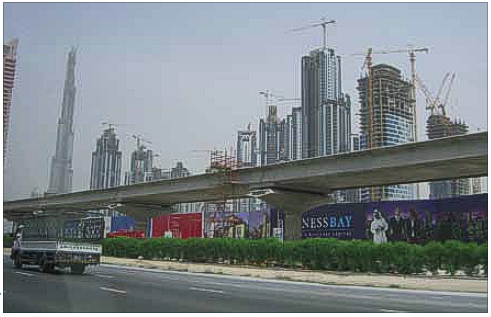
Dubai, United Arab Emirates. © Stig Enemark
Copyright © International Federation of Surveyors, November
2010
All rights reserved
International Federation of Surveyors (FIG)
Kalvebod Brygge 31–33
DK-1780 Copenhagen V
DENMARK
Tel. + 45 38 86 10 81
E-mail: FIG@FIG.net
www.fig.net
Published in English
Copenhagen, Denmark
ISBN 978-87-90907-89-1
Published by
International Federation of Surveyors (FIG)
Front cover: left: USA @ Stig Enemark; centre: Tokyo, Japan @ Stig Enemark;
right: Melbourne, Australia © Stig Enemark
Editors: Kauko Viitanen, Heidi Falkenbach and Katri Nuuja
Design: International Federation of Surveyors, FIG
|